Tuesday, October 8, 2013

THE BEST THINGS TO DO IN CHINA

Every time there's a holiday (and with Western and Chinese festivals to celebrate there seem to be a lot) Charlie and I try and go on a trip, taking the kids, now aged 6, 5 and just-turned-5, with us.  Here is my list of the best things we've done so far:


1. Hike along the Great Wall from Gubeikou to Jinshanling and finishing in Simatai. Includes one-two nights of camping.

Conveniently, one of the very best hiking destinations in China is just a 1-2 hour drive away from Beijing. We've explored a number of places along the Great Wall, but this is our favourite. You start in Gubeikou, walk to Jinshanling and end up in Simatai. It's a total of 18km. Along the way you can camp for one (adults) or two (if you're going with small children) nights in the watchtowers. This is actually not allowed on the Great Wall so you do need to be a bit subtle and might need to dodge guards, but well worth it to experience a night on the Great Wall of China. (Tip: camp in less restored watchtowers -- guards only patrol the pristine parts).


The view from Jinshanling, back over all the towers we walked along. 

Reading to the kids in the watchtower in Jinshanling we slept in the second night. It's just a little bit beyond the restored/touristy parts of the wall, so no guards check it at night.

Dawn in Jinshanling

The first part of the hike, from Gubeikou. The Gubeikou part of the hike is quite gentle.

Gubeikou section of the wall, quite an easy hike.

Gubeikou section of the wall

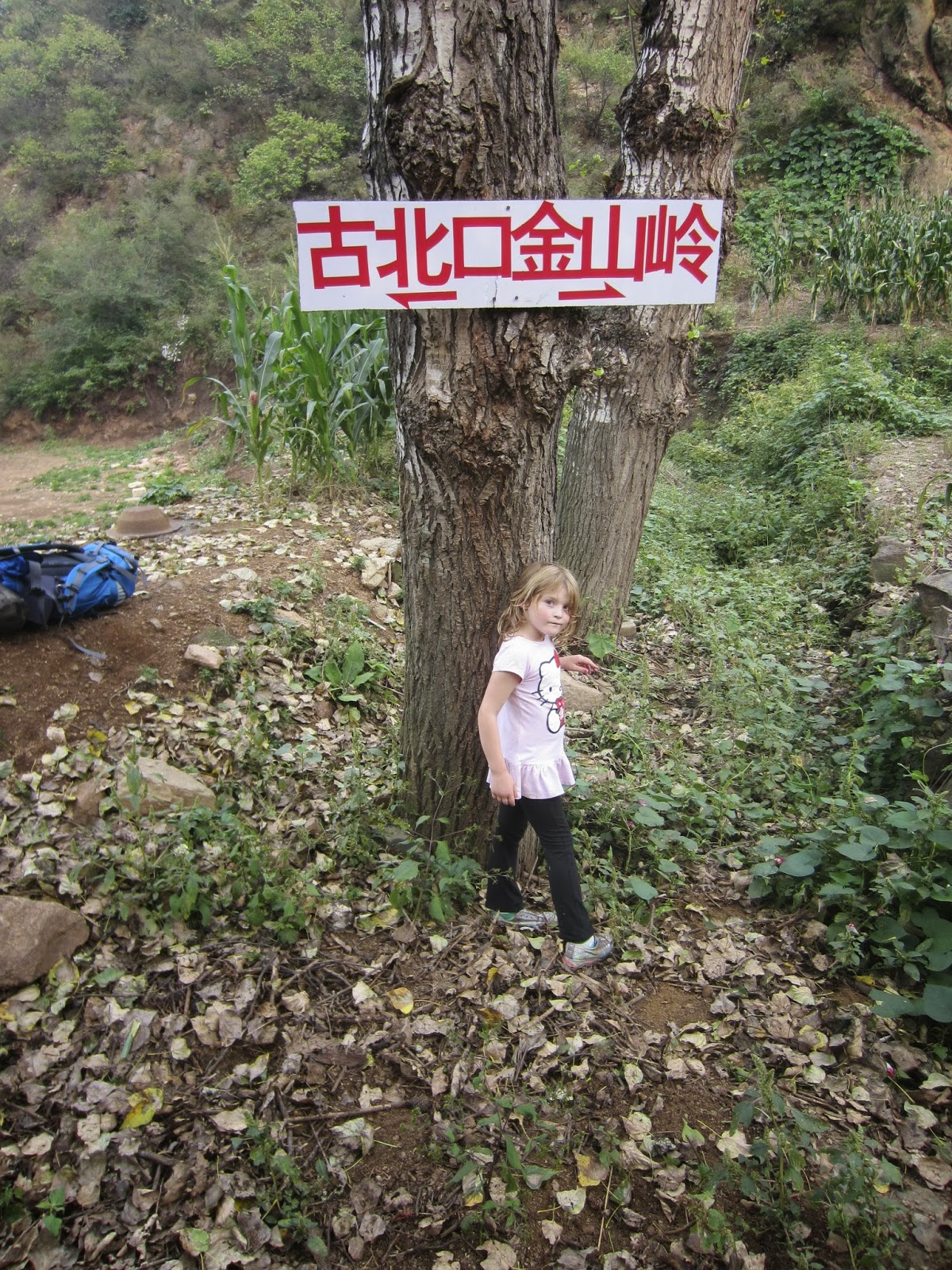
After Gubeikou, you need to leave the wall for a few hours as there is a military zone that you're not allowed to walk across. This takes you past an abandoned house and well and through the fields belonging to a village. It's actually a really nice part of the walk. 

The part of the hike that's not on the wall, through a village's cultivated fields. You have to turn right where we're sitting (you'll see a stone with markings on it, telling you not go to straight) 

There is a guesthouse directly after the walk off the wall, just before you start up to Jinshanling. You can buy water and possibly other things there. The kids played badminton. 

Dawn after the first night, right at the start of Jinshanling Great Wall

View from our first camp (the first tower in Jinshanling)

Dawn at the first camp

Dawn at the first camp. If you look up you can see we unwittingly slept under a hornets nest. 

Walking along the wall

The more restored part of the wall at Jinshanling. It gets very touristy, but is very beautiful nonetheless.

At this watchtower you could buy drinks, cold and hot, and even ice cream. 

The very last part of the walk, the bridge that takes you across to Simatai. You may be intercepted by a very entrepreneurial guesthouse owner, who looks out for prey using his binoculars and comes to meet you. We had breakfast at his guesthouse. 

The bridge again.


Additional tips for Great Wall hikers:

a) Especially if you speak Chinese, it's useful to chat to hawkers and gather information about where guards are posted. The guards can be difficult and insist you have a ticket for the different parts of the wall (Gubeikou, Jinshanling, Simatai), even though, given you've walked all the way along the wall and haven't come down from below, you haven't come across a ticket office. Also, by talking to hawkers, you can find out where you can camp without being hassled. Generally, the view when we were walking is that the guards don't come on duty till 8am, so you can get past anything at dawn. This is how we got down to Simatai which was still closed to the public when we did the hike. At night, less restored towers don't seem to be patrolled so are fine to set up a tent. 


b) PICNICS...If you don't live in Beijing, you may not know that you can get delicious baguettes, salamis and cheeses in Sanlitun at shops like Jenny Lou's and April Gourmet. (Plus chocolate, which can be useful for bribing children to hike a bit further...). Stock up on delicacies, bring a bottle of red wine, and you can have a great picnic on the wall, sitting in the sun.

c) WATER....Carry as much as you can. Hawkers on the wall do sell water, so we stocked up several times en route as well. The key thing is that you don't want to be caught without it on more deserted parts of the wall, especially if you need water for cooking too. 

d) THE BEIJING HIKERS Charlie and I organized this trip ourselves (the day before departure Charlie went and bought a tent and sleeping bags and a cooking stove at a hiking shop located at the end of Zhuzhong Hutong in Beijing). However, especially if you are new to Beijing or just visiting, you can also join a group, who will take care of everything for you: act as a guide on the walk and arrange food and transport from Beijing city centre. The Beijing Hikers is one group that I know of. In fact it was their book, Hiking Around Beijing, which alerted us to this particular hike. I also suspect that it was the Beijing Hikers who put down the markers on the trail which prevented us getting lost when we were doing it...In short, we owe them a big thank you for their enthusiasm and efforts, and I get the sense that they would do a great job of looking after you if you did want to hike with a guide and group. 

2. A trip out West to Xinjiang: camel-riding and camping in the Taklamakan Desert.


Western China is quite a long way from Beijing so it may be worth doing other things on this trip, e.g. visiting Kashgar or Tianchi (the Heavenly Lake near Urumqi). I have not visited Tianchi since 1996 and I felt Kashgar had been rather ruined, so I'm just focusing on the highlight of our trip, which was camel-riding and camping in the Taklamakan desert. We only did it for one night, but you can take a trip right across the desert, from south to north, on a camel. It takes 28 days.

We started our trip in Khotan (Hetian in Chinese), accessible by direct flight from Beijing, Shanghai and Guangzhou. We did not have any camping gear with us -- all that can be arranged locally. Our guide who arranged food, tents and sleeping bags -- and, critically, is friends with the camel owner -- was Kurban of Southern Silk Road Tours (mobile number 137-7929-1939, email: treklab@gmail.com). Like many Uighurs we met he speaks very good English and I couldn't recommend him more highly. Out in the desert, we ate lamb skewers and the round flatbread that Xinjiang is famous for.


Running down sand dunes, hours of fun for the kids


Buying carpets - please contact me if you're interested in the contact details of any carpet sellers.  We met one who spoke good English. 


Riding camels in the desert


Playing on sand dunes


Ditto


Our campsite


The camel train


Izzy outside our tent


Kurban, our guide, is on the left, the camel owner is on the right. He is the oldest of 8 brothers and together they own 250 camels. Apparently they are only family in the area who rent out their camels for tourism. Kurban speaks excellent English, so communication is not a problem. 


One of the highlights of Khotan/Hetian for the kids -- Marco's cafe. They ate spaghetti bolognese, cupcakes, and generally were in seventh heaven. They wanted to go back again and again. The owners are Malaysian Chinese and lovely. They also serve delicious curries and beef and chicken puffs.


3. Lijiang and Tiger Leaping Gorge.

As Charlie had to go back to Beijing for work, I did not actually do the Tiger Leaping Gorge hike, though I would have loved to. Instead, I went by car along a rather scary mountain road, finishing just beyond the endpoint of the hike in the middle part of Tiger Leaping Gorge. This was all arranged by the best hostel at the end of the hike, Sean's Spring Guesthouse (email: tigerleapinggorges@gmail.com), which is a really nice place to stay. Sean's daughter, Lucy, was absolutely lovely to us, and fed us lots of walnuts while pointing out that the place we were staying is called Walnut Village. Later I found out Sean can actually arrange mules to take you along the hike, which I would have probably done if I'd been a bit better organized. 

Lijiang is a lovely town -- accessible by direct flight from Beijing. Very touristy and on the twee side, but definitely still worth visiting. It's filled with dozens upon dozens of very cute guesthouses, which is highly unusual in China, where most hotels are horrid depressing institutional affairs.


Along the road in the "middle" section of Tiger Leaping Gorge


Lucy took us for a walk along the road near the middle section of Tiger Leaping Gorge


Sean's guest house


Sean's guest house


The middle gorge, just along the road from Sean's guest house


Friday, June 7, 2013

The Chinese and Children

One of the great joys of living in China is the way Chinese people treat children. I noticed it the moment we got onto the Air China flight in New York last February that took us on this adventure. Charlie was not around, so I was travelling alone with the kids, who were then 5, 4 and 3. Most of the other passengers were Chinese.

As the kids ran up and down the aisles in the plane (I know, I am the co-passenger from hell), lots of Chinese passengers put out their hands to touch them. It was very sweet. In the US, no one ever touches your kids. I don't know why. But the kids love all the attention, and it made me, as the mother of three quite unruly kids, feel very welcome.

This warm approach to children has continued since I got here, and, I have to say, it is one of the joys of living in China. In England, people tut-tut if your children are noisy, in China they smile indulgently and try and cuddle them.

I have to confess I even used this national trait to get a new visa expedited more quickly. We were on the verge of missing a flight to see Charlie's sister, Georgie, in Australia, because we weren't going to get our passports back from the Chinese authorities in time. There were no other flights that week, because it was Chinse New Year and all the planes were full. Charlie's colleague, Amelia, had spent an entire day at the Exit-Entry bureau trying to get them back, but to no effect. The process is supposed to take a week, and a week it was going to take.

"Let's take the girls," I suggested to Charlie. He agreed to one, I insisted on taking both. Now in China, your father's sister is called your "GuGu." I told the girls, "When you get to the counter, look very sad and tell them that if we don't get our passports back in time, you won't be able to see your GuGu."
Needless to say, most of this instruction was forgotten in the excitement of the moment, and when we got to the counter there were howls of delight mixed with enthusiastic shouts of "GuGu! Gugu! Gugu!"
The other thing is that in China, calling someone Aunt is a very nice, warm way of addressing them, and that's what the two Chinese public security officials on duty, both of them women, thought the girls were doing. They melted immediately. We were on the flight to Australia that afternoon, and saw the real GuGu.


Wednesday, June 5, 2013

The Wisdom of Crowds/Idiocy of Herds

I just reread my blogposts from our first months in China. It's funny, of all the things that I said, it's my comment about wearing a bicycle helmet that, one year on, looks odd. I said I was wearing one because everyone does these days. But this is not true. What I actually meant, though I didn't realize it at the time, is that everyone in the US, where I was living up to that moment, wears one. If I'd looked around fellow cyclists in China, I would have noticed that not one single person had one on. And now I've lived in China more than one year, I'd never dream of wearing one either. It's funny, you think you are wearing a helmet because the safety statistics tell you that it's what you should be doing. In fact, you're only wearing it because seeing so many people around you wearing one makes you feel you should. Take away all the peer pressure, and you no longer bother. And it doesn't just apply to bicycle helmets...
 
It also applies to bicycle lights! I have been quite careful about always having bicycle lights ever since a formative experience while a student at Oxford when one of those cycling busybodies the city seems to have a lot of shouted at me about the dangers of not having any. But as we were going out to dinner a few nights ago, cycling through Beijing's hutongs or alleys to get to a small restaurant, Charlie asked if he should attach the light to his bike. "No" I advised. "No one else does." It almost seemed to me like the red light would be confusing for the other cyclists and pedestrians. Everyone here is used to scanning their path for looming dark objects, if you suddenly put some bright light in the middle it would put everyone off kilter. Yes: after only 15 months in China, I no longer see having lights on my bicycle as an essential device for helping others see me in the dark, but as a distraction that will cause more accidents than it prevents. 


Wednesday, April 11, 2012

GO LOCAL, MOVE TO CHINA!

I remember from school in England learning about the Industrial Revolution, and Britain becoming the “workshop of the world.” I suddenly get an inkling of what that may have been like, because in China, I do feel like I am right in the middle of the workshop of the world. 

Places I’ve been to so far:
  • The toy market at Hongqiao Market. Wow. Every single toy under the sun for sale, and for a fraction of the price they go for in the US or Europe. German wooden dolls houses, American Barbie Dolls, Wii’s, tennis rackets, roller blades, gorgeous wooden puzzles. I really felt like Charlie entering the chocolate factory, like all my wildest consumer dreams had come true.
  • The Silk Market, Yashow Market in Sanlitun, Hongqiao Market. The clothes you can buy for very little money – gorgeous cashmere sweaters, silk dressing gowns, beautifully embroidered shirts, incredibly cute cotton children’s dresses - just blew me away. (Bargaining can be a bit exhausting though.)
  • The Fabric Market. This was like a sight for sore eyes to me. Clothes in the West are so cheap these days that no one makes dresses anymore, and I wouldn’t even have known where to buy fabric in upstate New York where I live. Here in Beijing's fabric market there are shops selling every type of material – cotton, t-shirt, fur, rainproof, curtain material, bedding material. There’s also every kind of button, including, for example, cute ones in the shape of flowers that the girls and I made necklaces out of. Then there are shops filled with every colour of thread under the sun. There’s even leather and buckles you can make belts out of. The wonderful Sophia – wife of FT correspondent Jamil Anderlini – also introduced me to her tailor, so I am going to get clothes I’ve always wanted -- but never been able to find -- made. I can also finally afford  curtains for our house in upstate New York and sofa covers to replace the ones the dog chewed up.
  • Wooden furniture. Thanks to Yvonne, we found this amazing place selling not only old Chinese furniture, but new furniture made out of old wood they get from old houses in the countryside. We bought cupboards, a wooden table, wooden benches. There were literally warehouses full of stuff I really, really liked. This is quite a big contrast to my experience in the West, where I always have immense trouble buying furniture because I don’t like much of it in the mid-price range. Pottery Barn and Crate & Barrel don’t seem to be much better quality than Ikea, just a lot more expensive. In China, I’ve found something matching my own aesthetic. Not super-cheap, unfortunately, but not too bad either (RMB4800 for a big wooden dining table)
  • The flower market. To be able to fill our living room with fresh cut flowers every week, without being a millionaire, is, quite frankly, amazing.

And all bought locally! No more carbon footprint from this stuff going over the ocean in order for me to buy it at ten times the price from Toys R Us or Banana Republic! (True, the flowers are flown from Yunnan…slight guilt there...)

P.S. I’m not as excited about pirated DVDs as last time I lived here. Yes it’s great being able to watch lots of movies, but in the US we now have Netflix, whose choice is – now I’m one of those 40-somethings who watches documentaries and isn’t that interested in the latest Hollywood blockbuster – quite frankly better. 

TIPS FOR EVERYDAY LIVING IN CHINA #2

PARK FOR FREE AND AVOID PARKING TICKETS BY BLOCKING THE SIDEWALK! 

I can’t say I’m entirely on top of the Beijing parking rules yet, but a couple of observations so far (feedback welcomed) 
1. If you park in what looks like a parking space along the road  -- white lines in a car-sized, box shape – two things are likely to happen. If there is someone in a worn-out, slightly faded uniform around, you’re likely to be charged a fair amount to park there (Rmb10 per hour on average). If there is no one like that around, and you go ahead and park anyway, you’re liable to get a Rmb200 parking ticket. 
2. If you just drive headlong onto the pavement, blocking the entrance to shops and restaurants and preventing pedestrians from passing except by stepping on the road, you may get yelled at by a few people but you can park for at least 2 days without any of the financial disadvantages of option 1.  It could actually be longer than two days, that’s just the longest I’ve tried. 

Tuesday, April 10, 2012

AT THE AIRPORT

In his interview about China for The Browser, New Yorker correspondent Evan Osnos introduced me to the idea of the “airport” view of a country. This is a concept devised by political economist Huang Yasheng. It means you see everything about the country through the prism of what the airport is like. Fancy airport, great country, great economy. (I have a slight suspicion this is what Niall Ferguson has fallen victim to recently, he seems to be very ra-ra about China at the moment).

Today (April 6th) I flew out of Beijing Capital Airport with my two girls (age 4 and 3) and so I’d like to include my own airport observations.

  • The architecture seemed fine: it’s not something I pay much attention to.
  • I’ve travelled a lot, and whether the airport carts are free or not says a lot about a country’s attitude to visitors. If you have a system where an exhausted person, coming off a 12 hour flight, has to fumble with change which -- given they’ve just come from a foreign country -- they might not even have yet, or a credit card they might not own (remember in some countries not every sentient being uses Mastercard or Visa), I feel that, on balance, as a country, you haven’t given much thought to making foreigners feel welcome. At Beijing airport, needless to say, the carts are free.
  • Ditto Wifi.
  • No waiting in line anywhere at all – that was very liberating, especially travelling with young children.
  • Check out the picture below from immigration control! Yes, in a one-party state, where government officials traditionally had no accountability, the potential immigree can -- with the press of a button -- give feedback on the performance of his immigration officer. Sorry mate, but your "checking time was too slow"…I hope the INS and immigration services around the world take some tips from this approach, because I’ve had some bad experiences.

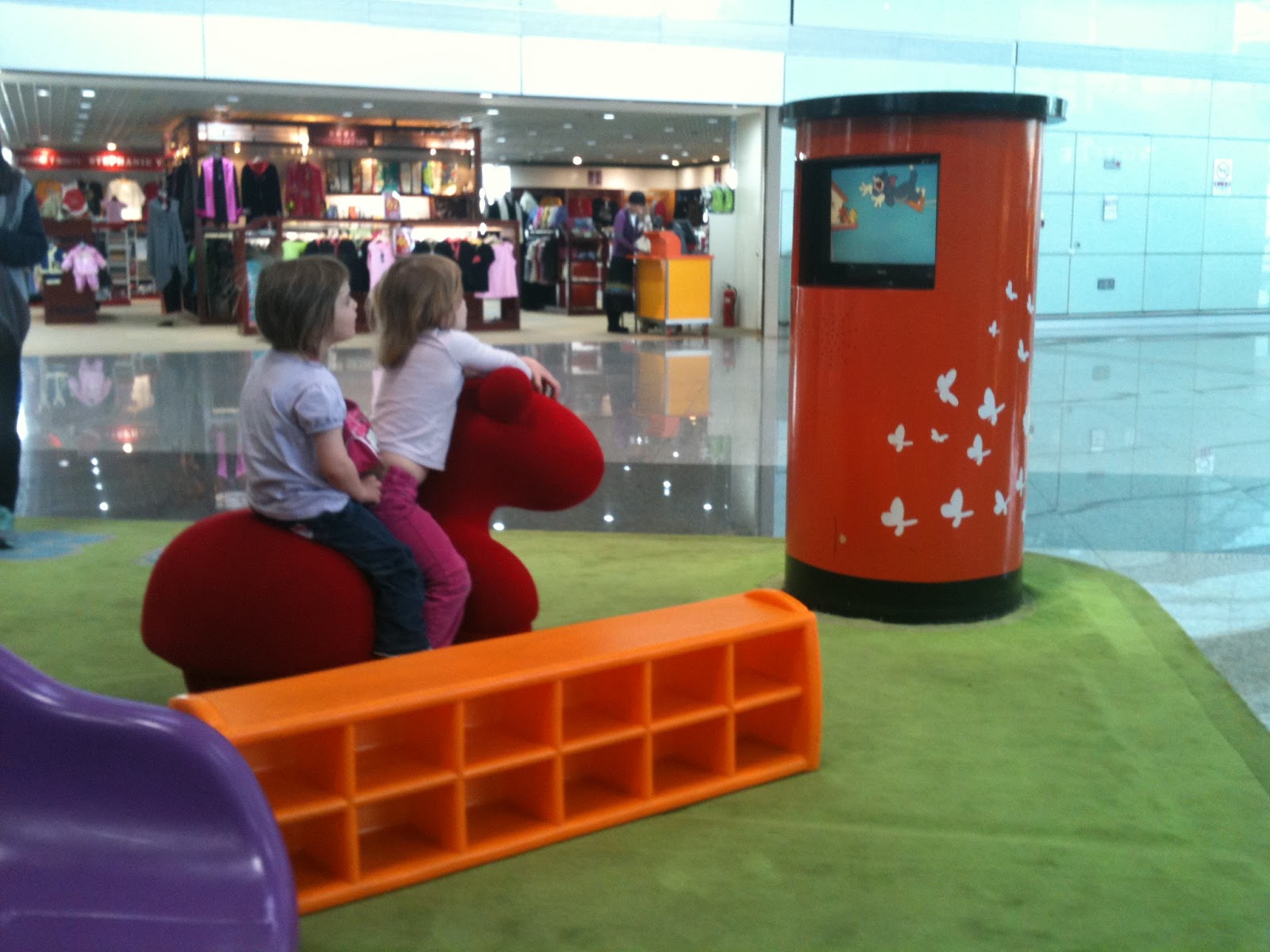
  • There was a children’s playground. A simple concept but again, if you’re travelling with young kids, what a Godsend. I happily sipped a latte by some plants (which someone was in the process of dusting) as the girls played and watched tv.

  • I could send a parcel by express mail!  Of course the moment I was through security, I realized I still had our Chinese car's registration documents in my handbag. In the US or the UK, I’d be completely sunk. In Beijing, I knew I would probably be OK, and lo and behold I was. There was a desk where they picked up the documents and sent them by overnight mail to Charlie, who is still in Beijing. He can put them in the car tomorrow. [Update: the car documents didn't arrive until five days later! So much for overnight express...]


TIPS FOR EVERYDAY LIVING IN CHINA # 1

(This one from my friend Yvonne) THERE'S A BURGLAR IN MY HOUSE! HOW DO I MAKE SURE THE POLICE COME QUICKLY (...because...I've heard...that sometimes...they don't)?

When you call, feel free to gloss over the fact there is a man in your living room trying to steal all your worldly belongings. For a faster response, mention your suspicion that someone is putting up a Falun Gong poster on your front door. When they arrive minutes later, you can just say you were mistaken.